elexercise \ɪˈlɛk · sɚ · saɪz\

verb. to produce electricity through exercise

noun. a movement for a movement; the empowerment of people to meet personal health goals while contributing to planetary health
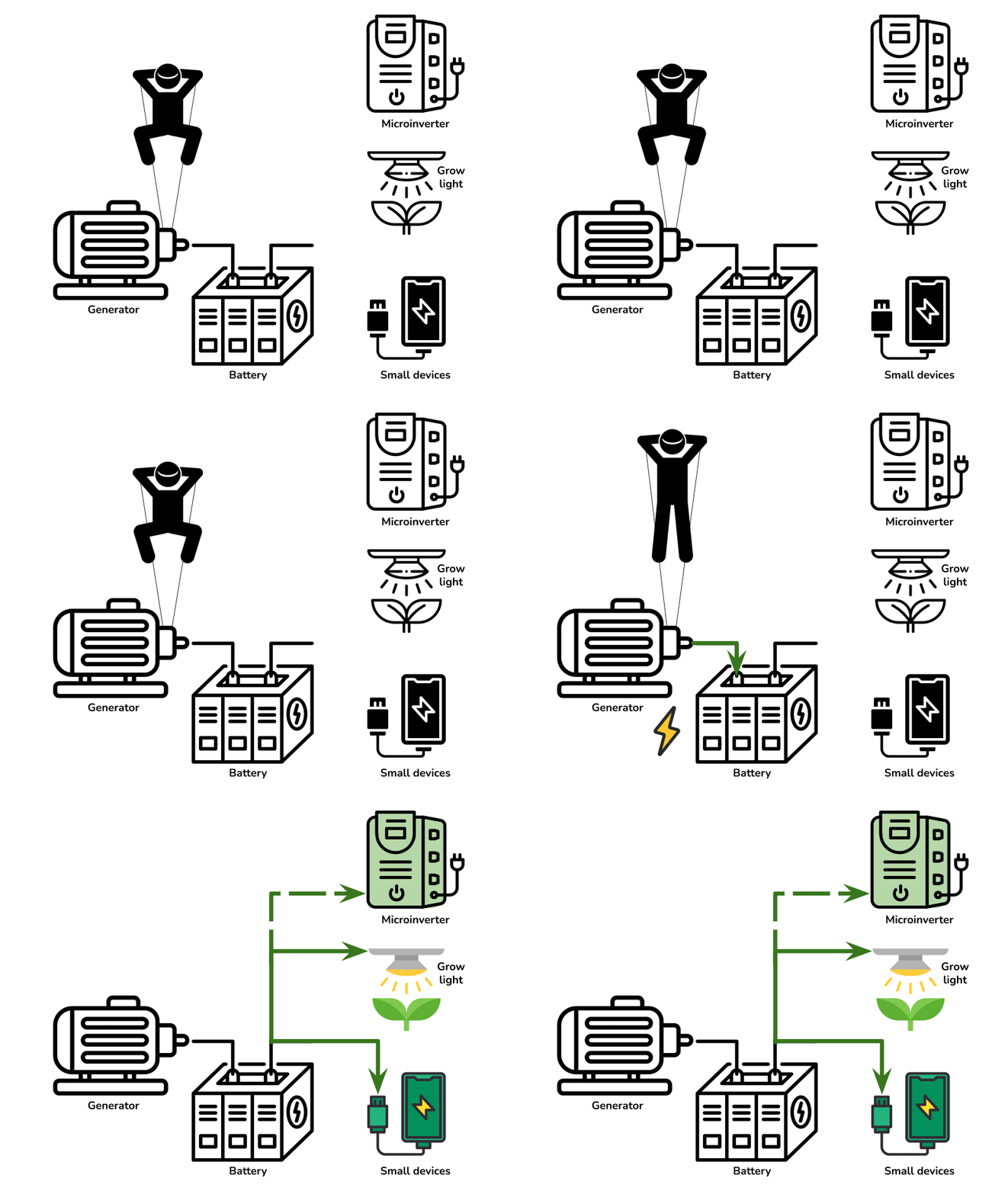
Animated diagram of a person doing a squat exercise connected to a generator, which charges a battery that powers a microinverter, a grow light, and small devices like a phone.

What is elexercise?

Elexercise takes aim at a global-scale absurdity: humans currently do an immense amount of useless work. Pedal to spin a wheel for a little while. Lift weights up and down, repeatedly. Climb up a wall, then climb back down. Meanwhile, gyms consume power to run power-intensive HVAC systems and cardio equipment. Step back for a second and think about the fitness industry at large: we burn fossil fuels to generate electricity so that we can do useless work more comfortably. If we could physically feel how much work is required to generate the electricity we use, would it impact our consumption habits?

Read more >>
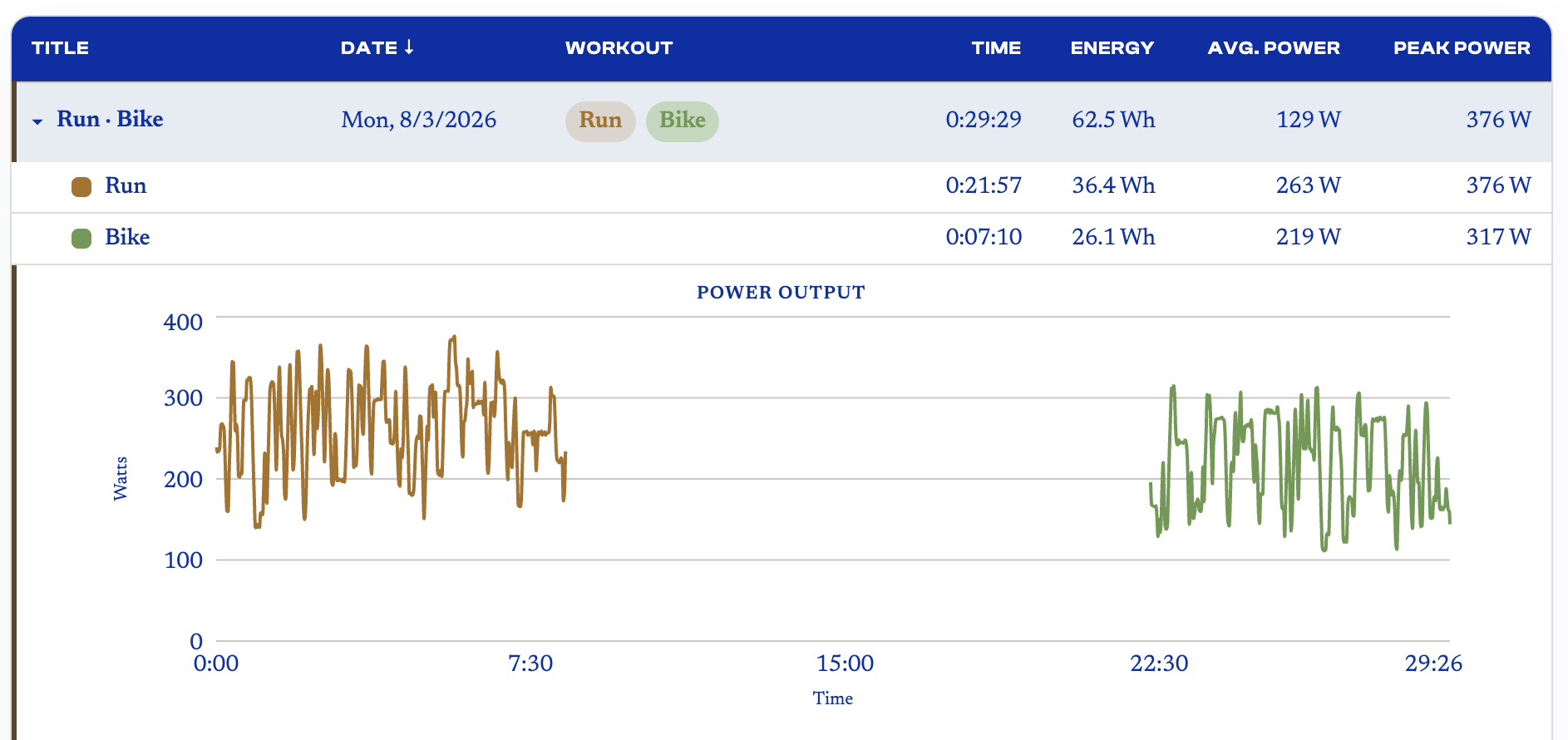
Workout history table and power output chart for a combined run and bike session, showing energy generated and average/peak power for each segment.

How Much Power?

A single hard workout can generate 0.375 kWh -- nearly 30 iPhone charges. Scale that up and human power alone could offset up to 83% of a gym’s annual electricity bill, with U.S. gym members collectively capable of generating an estimated 2.4 TWh a year, enough to power 220,000 households.

Read more >>
Line chart comparing lifetime cost across a passive, motorized, and electricity-generating treadmill in Hawaii, showing the motorized treadmill costing over $1,800 more than the electricity-generating option over 7 years

Is It Cheaper?

We assert that elexercise equipment is cheaper than its traditional counterparts in many scenarios, when accounting for the electricity generation over its lifetime. This cost-benefit analysis depends on many factors, including capital costs, electricity prices, energy generation per workout, and more.

Read more >>
Diagram showing that rising climate anxiety doesn't lead to climate action, while exercise has high self-efficacy and response-efficacy, bridging to a thriving, sustainable community.

The Psychological Bridge: From Exercise to Climate Action
Climate anxiety is not strongly correlated with climate action because individual effort can feel disconnected from tangible outcomes. We argue that elexercise can help close that gap by attaching a real, measurably productive output to a workout and leveraging the vast social infrastructure of fitness. This can not only strengthen individual self-efficacy but also tap into the far more powerful mechanisms of collective action, which climate psychology identifies as the strongest predictor of sustained engagement.

Read more >>
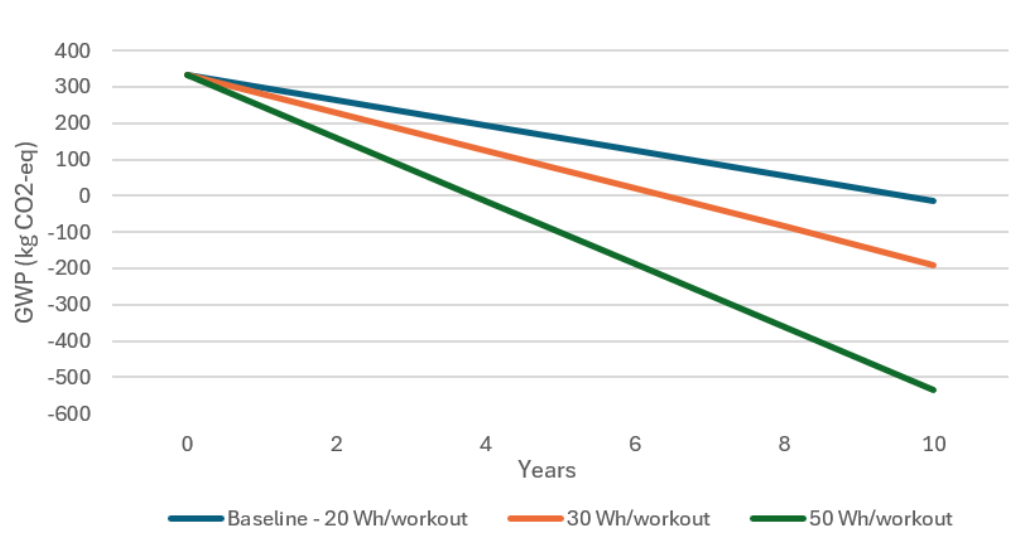
Line chart showing global warming potential over 10 years at 20, 30, and 50 watt-hours generated per workout, each reaching carbon negativity at a different year.

Understanding the Environmental Footprint
A Life Cycle Assessment of elexercise equipment shows that it can potentially be carbon negative, depending on how it's produced and used. Raw materials for the battery and rack drive most of the impact, while energy generated, grid carbon intensity, and equipment lifespan determine how much of that can be offset over time.

Read more >>
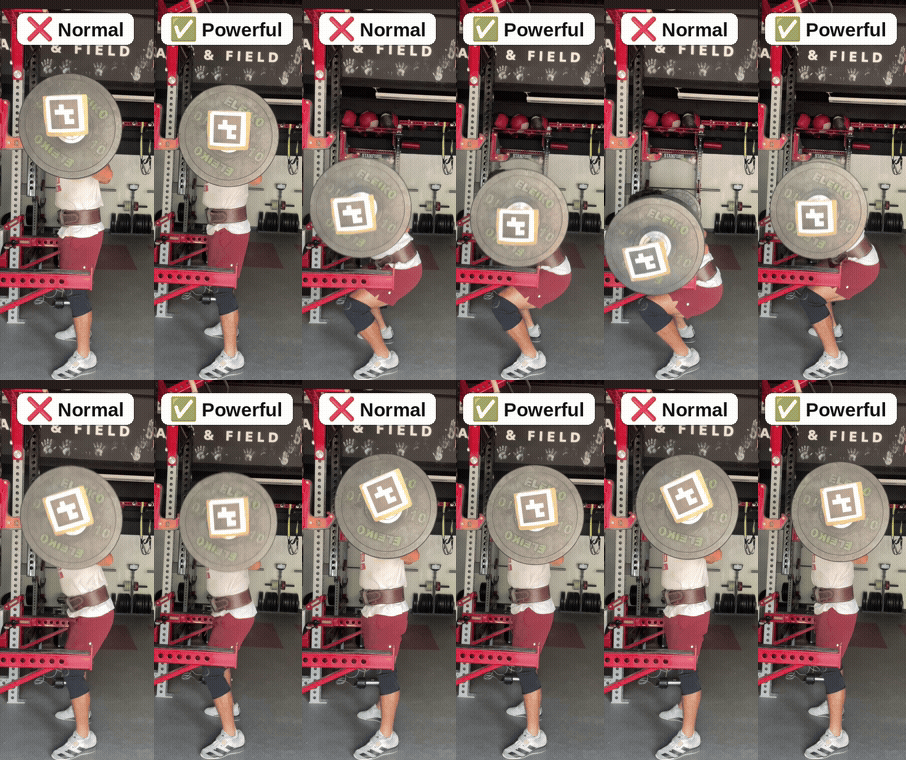
Side-by-side photos of the same squat rep with a velocity tracker on the barbell, labeled 'Normal' with a red X on the left and 'Powerful' with a green checkmark on the right.

The Importance of Training With Power

The weight on the bar tells you what you attempted. How fast you moved it tells you what you actually achieved. Most people focus only on weight -- AKA force -- but disregard the velocity component of power, but training to be powerful builds the acceleration that actually shows up in your sport. Here’s the part that should change how people train: explosiveness is something that can be developed, like a skill.

Read more >>